9/29/2023
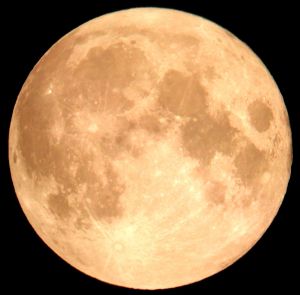
The Moon Tree at Lincoln State Park
One of the interesting historical tidbits I came across in my research this week was the moon tree at Lincoln State Park.
“What is the Moon Tree?” you ask?
Well, freshen up that cup of coffee and sit back and I will tell you.
The Space Race
Some of you are old enough to remember the race to land a man on the moon engaged in by the United States and the former Soviet Union. The Soviets were keen to prove the superiority of the Communist system and the United States the capitalist system. It was a time of great excitement and national pride as the United States’ NASA program slowly built a program that would achieve the goal. The first program was the Mercury program, which launched the first American into space. At this point, the United States was behind, as the Russians had already placed a man in orbit. The Mercury space capsule held only one astronaut, however the next program, Gemini, held two. The step in the process was the development of the Apollo Program, which featured the powerful Saturn V rocket with two spacecraft perched on top, the Command Module, and the Lunar Lander. The plan called for two men to descend to the lunar surface in the Lunar Lander while the third stayed behind in the Command Module. After several test missions, during one of which three astronauts lost their lives when the rocket exploded on the launch pad. However, NASA plodded on and finally, on July 20, 1969, the United States achieved its goal of landing, not one, but two, men on the moon. The United States had won the Space Race.
Exciting Time
I remember the space race as being a time of great excitement. I remember the sensation of exhilaration I felt as these powerful rockets launched, carrying their brave cargo of men aloft into the heavens. The astronauts served as childhood heroes as I grew up.
The Moon Tree Program
One of these missions formed the backdrop for the Moon Tree program, which was the brainchild of Ed Cliff, Chief of the United States Forest Service. In his younger days Cliff had served as chief of the fire jumpers and had met Stuart Roosa, who worked as a fire jumper. Roosa had gone on to become a test pilot. Test pilots during this era formed a rich pool of recruits for the astronaut program and Roosa was chosen for the Apollo Program. Roosa was assigned to fly on the Apollo 14 mission and was training for this flight when his old acquaintance Ed Cliff approached him with the idea of sending tree seeds on a mission to the moon to see how the seeds would react to exposure to zero gravity and radiation. Roosa agreed the experiment and took a packet containing several hundred tree seeds in his Personal Preference Kit. Each astronaut had one of these kits, which usually contained photographs, mementos, and other personal items.
In Space
The seeds never reached the moon’s surface, instead orbiting high above it as Roosa performed his assigned duties aboard the Command Module. When the seeds returned to earth, they underwent the standard decontamination process and were then distributed out to various Forest Service facilities to evaluate their germination rates.
Germinating the Seedlings
Trees species include loblolly pine, redwood, sweet gum, sycamore, and Douglas fir trees. Surprisingly, the seeds had high germination rates and developed into normal trees.
Distributing the Seedlings
No formal records were kept as to the destinations of the seedlings; however, most were sent to National and State parks and universities. One went to the White House and another to Valley Forge. Some went to foreign countries. 40 of the 50 states received at least one tree. One tree slated for Indiana ended up at Lincoln State Park in southern Indiana. The tree is a sycamore and was planted during a ceremony by the Raintree Girl Scout Council planted the Moon Tree on May 1, 1976. The tree is growing quite nicely along Lincoln Lake just off Trail 1. I have been to Lincoln State Park numerous times and somehow have missed this interesting part of Space Program history. I will remedy that when I return.
The story will, of course, be included in the book when I publish it.

 Mossy Feet Books - Author Paul R. Wonning