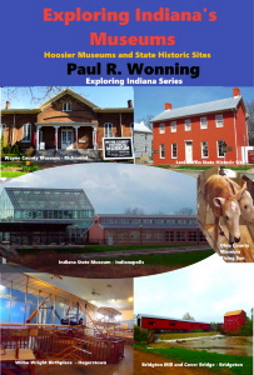
Exploring Indiana’s Museums
Discover the rich historical heritage of Indiana using this comprehensive directory of the state’s diverse assortment of museums. Exploring Indiana’s Museums includes the complete book, Short History of Museums, Indiana Edition, as well as a history of the Indiana State Museum and its State Historic Sites. The Short History of Museums relates the history of the ancient museums and includes a listing of the world’s leading museums. This guide in an invaluable aid to home school parents on a quest to educate their children in the history and culture of Indiana. The guide includes history, art, train, fire department, children’s and many other types of museums. The 288-page book lists museums in all of the 92 counties in Indiana. The 11 state historic sites administered by the Indiana State Museum are also listed.
At the time of this book’s publishing Indiana had approximately 348 museums located in most of its counties.
This article will talk about three of these museums.
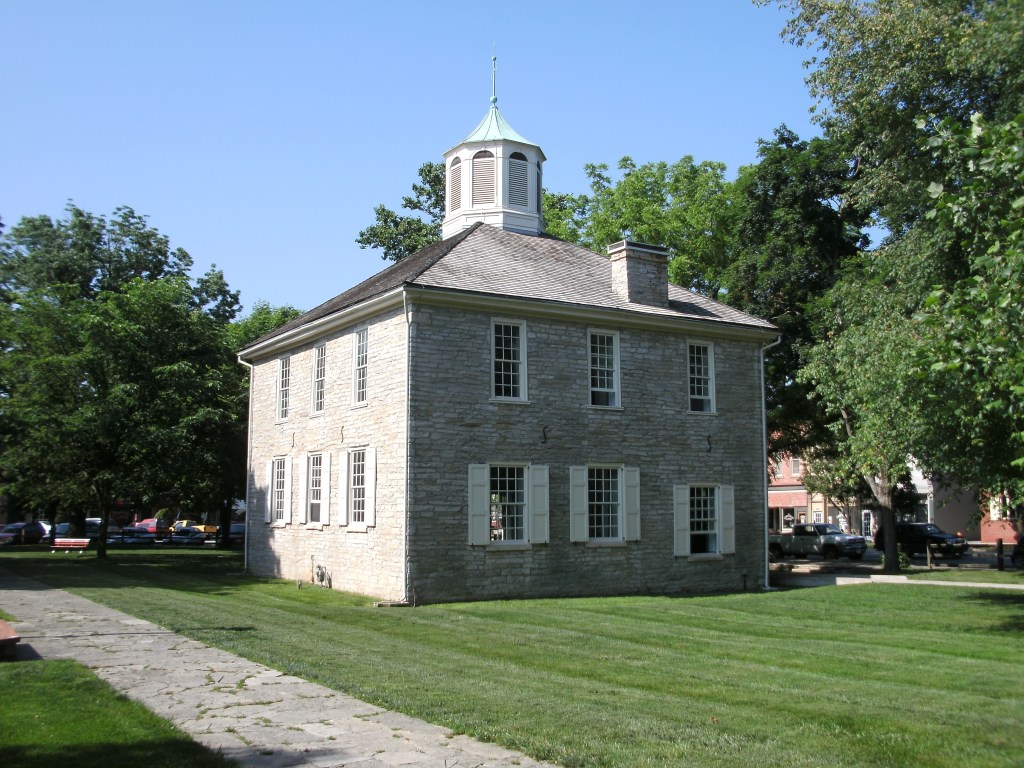
Corydon Capitol State Historic Site
The Indiana Territory Legislature contracted with Dennis Pennington to build the new Territorial capitol at Corydon. Pennington was a builder and prominent citizen of Corydon and served as Speaker of the House. He began construction of the building in either 1811 or 1812. The building would serve as the Harrison County Court House at first, then as the territorial capitol when it moved to Corydon. When the legislature did move in 1813, they met in the building.
The Capitol
Pennington used limestone quarried nearby to construct the building, which was two stories tall and forty feet square. The two-and-a-half-foot thick stone foundation delved three feet into the earth and supported the two-foot-thick stone walls. The lower room had fifteen-foot ceilings, the upper floor ten feet. One large fireplace on each floor provided heat. The cost to build the capitol was $1500.
The First Legislature
The first General Assembly consisted of 29 representatives, 10 senators and the lieutenant governor met in the building in November 1816. Indiana received Statehood on December 16, 1816. Corydon remained the State Capital until 1825, when it moved to the new city of Indianapolis on the White River in the center of the state. After the capital move to Indianapolis, the building became the Harrison County Courthouse. Harrison County renovated the building in 1873, covering the stone floors with wood and closing the fireplaces. In 1917, the State of Indiana purchased the building with the intent of preserving it. Harrison County built the current courthouse in 1929 and the State took over the building. The State renovated the building to its original condition.
The Corydon State Historic Site commemorates the history of Indiana’s first state capitol. Visit the federal-style limestone building that was built between 1814 to 1816 and served as the state capitol from 1816 to 1825. Tours also include Governor Hendricks’ Headquarters, a two-story federal style brick house built in 1817 which also served as Governor Hendricks’ home while he was governor of Indiana from 1822 to 1825. The site is very informative and rich with history. Open Tuesday through Saturday, 9 a.m. to 5 p.m. and on Sunday from 1 p.m. to 5 p.m. Closed Mondays and on some holidays. Winter hours vary. For current hours and information, contact:
Corydon Capitol State Historic Site
Address
202 E. Walnut St.
Corydon, IN 47112
812-738-4890
Vintage Fire Museum
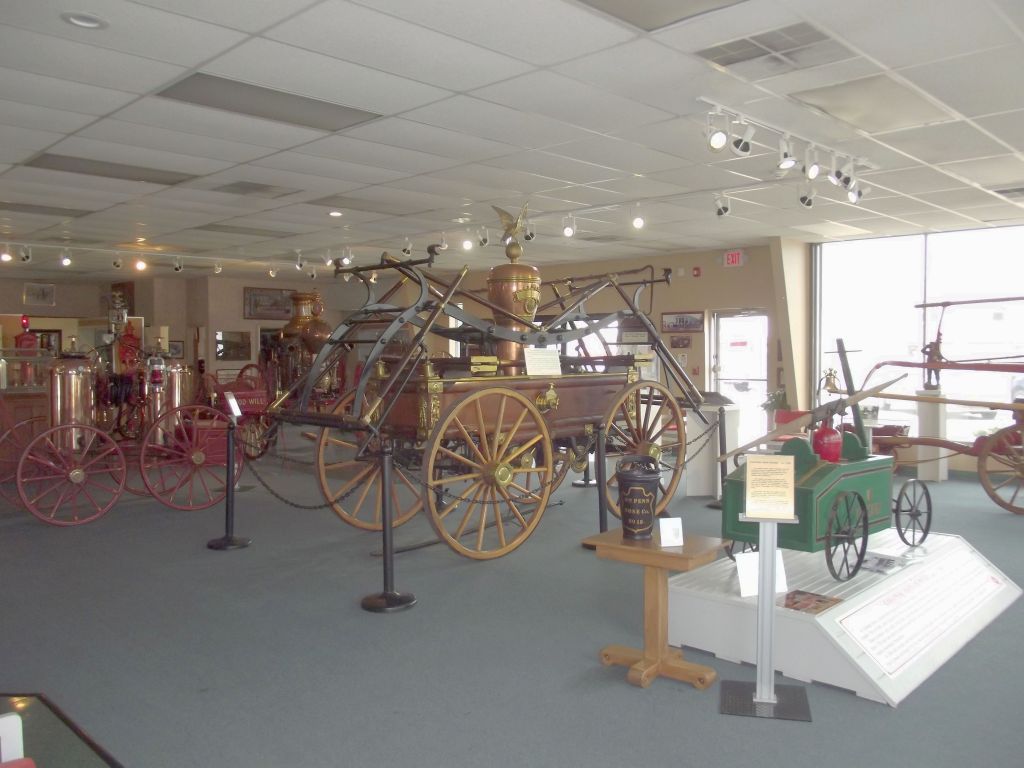
Founded in 2009, the Friends of the New Albany Fire Museum, Inc. acquired the fire equipment collection gathered by Fred Conway and established a fire equipment museum.
William Frederick “Fred” Conway, Sr (December 6, 1928 – September 13, 1999)
The son of Dewitt Huss and Olive Frederick Conway, Fred was native to Pittsburgh, Pennsylvania. Fred Conway wanted to be a fireman from the earliest days of his childhood. He joined the Perry Township Volunteer Fire Department and rose to become the fire chief.
Conway would marry Betty Allen, with whom he would have three children. Conway owned a number of companies, including the Home Safety Equipment Company, Skyline Advertising and Fire Buff House. He founded the Perry Township Volunteer Fire Company near Evansville, Indiana. He was also the developer of Squire Boone Cavern, in Harrison County. An historian, he wrote several books on the Civil War, firefighting and a book about Squire Boone entitled The Incredible Adventures of Daniel Boone’s Kid Brother, Squire. He also served as a consultant for the PBS show Nova and sponsored a Christian radio broadcast. A professional musician, he played with several bands in southern Indiana. He was also on the Floyd County Memorial Hospital’s Board of Directors.
As a firefighter, he noted a common problem that arose when a fire broke out that frustrated him. Since there might be two or more fire departments in a given area, people many times did not know which fire department to call. Frequently, they called one that was further from the fire than another closer one that could get to the fire quicker. Conway came up with the idea that if people had a sticker with the correct fire department listed on it stuck to their phone, they would know which company to call. Initially, Conway experimented with adhesive stickers that you had to lick. Many times, these did not stick well, and would fall off. He next tried pressure sensitive labels, which worked well. In 1964 he started his company, Discount Labels, began ordering labels and selling them to fire departments to give to their customers. As the business grew, Conway bought a label maker and began making his own labels in his basement. The business continued doing well, so the family moved to a home that had a big garage, where he made his labels. His next move was to a vacant donut shop in New Albany, Indiana. The success of the business allowed him to indulge in another passion, collecting firefighting equipment. He collected old fire engines, restored them and displayed them in his office. When this collection outgrew his office, he opened the Vintage Fire Engines, Inc on Mt. Tabor Road, near New Albany in June 1999. Three months later, Conway passed away and the collection languished behind locked doors. The building’s owners needed the building for other purposes and considered selling the collection.
After his death, Conway was interred in Kraft-Graceland Memorial Park,
New Albany, Indiana.
Vintage Fire Museum
The Friends of the New Albany Fire Museum purchased Conway’s collection in 2010, moving to an abandoned car dealership. They stored the collection and allowed visitors at times limited by the volunteer staff. In 2012 the group changed its name to the Vintage Fire Museum. In 2013 the museum opened in its current location with expanded hours. The group had added many items to the collection. A knowledgeable guide will walk visitors to the museum back in time as they progress through a complete history of firefighting. The museum’s exhibits include everything from the very first firefighting equipment, fire buckets, to steam powered beauties. Additionally, visitors will see one of the first fire engines in America, a hand pump engine dating from 1756. Fire extinguishing hand grenades, early fire alarms, fire extinguishers and other firefighting paraphernalia. make up the rest of the museum’s magnificent collection. The facility is handicap accessible with direct door access for buses. A tour usually takes about 30 minutes, after which visitors are free to browse. The museum can accommodate up to 60 visitors.
For hours and other information, contact”
Vintage Fire Museum
723 Spring Street
Jeffersonville, IN 47130
1-812-948-8711
Wayne County Historical Museum
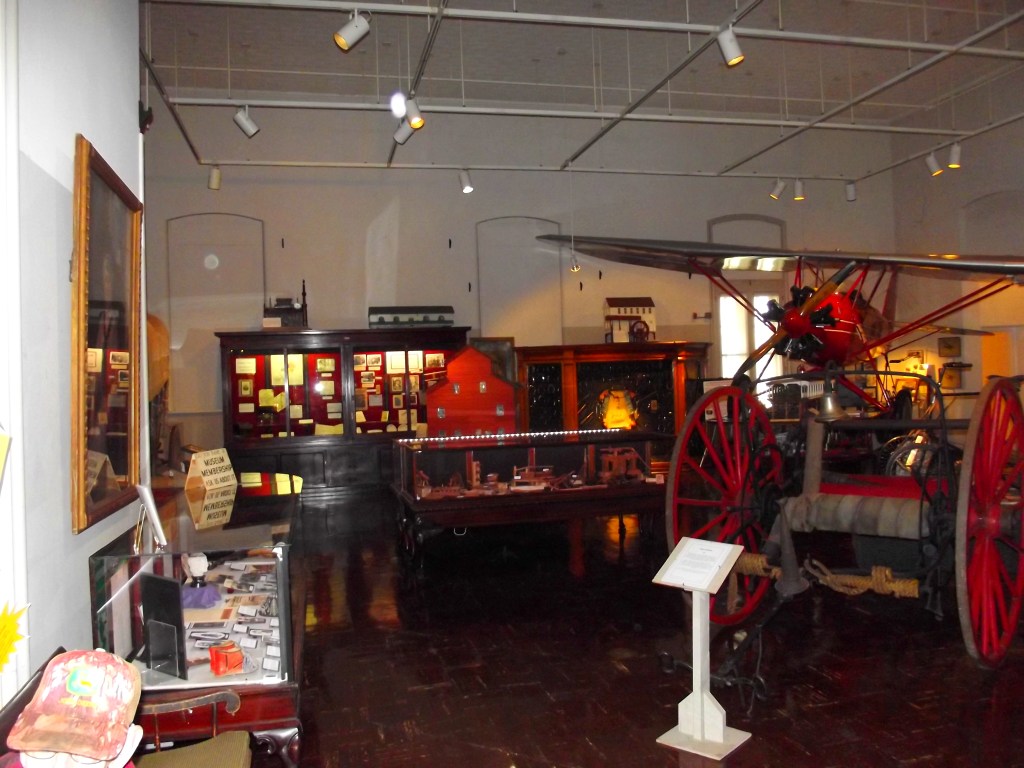
The compact site includes eight historical buildings with a wealth of historical photos and artifacts from Wayne County’s history. The Museum hosts several special events throughout the year. This museum represents itself as a miniature Smithsonian Museum. The description is far from deceptive. The visitor can expect to spend a minimum of three hours in this delightful museum.
Miniature Smithsonian
The museum covers a wide spectrum of subjects, using a vast array of models, artifacts, photographs and documents. History, geology, archeology, aviation, transportation and agriculture are just a few of the topics the visitor can expect to find in the museum.
Early Life in Indiana
Wayne County Historical Museum includes a magnificent array of exhibits that interpret the early history of Richmond and Indiana in general. The exhibits include maps, documents, models and artifacts that display many of the items and methods the pioneers and early residents used to complete their daily tasks. Visitors can learn and enjoy examining the rich array of artifacts and models in the museum.
Egyptian Mummy
The Sarcophagus Room has an Egyptian mummy complete with sarcophagus. Archeologists believe the man died around 900 BC. Read about him and the fascinating story of the woman that acquired him, Julia Meek Gaar.
Vintage Automobiles
Just when the visitor thinks they have completed their tour of the museum, they enter the vintage automobile section in the huge garage. The display includes many automobiles manufactured right in Richmond.
Wagons and Carriages
Upon exiting the rear of the museum, the visitor will next find an impressive assortment of wagons and carriages. The assortment includes a milk wagon, hearse, carriages and a school hack. A number of horse drawn agricultural equipment is found in this area.
Palladium Printing Office
Founded by Nelson Boone, the grandson of Squire Boone and great nephew of Daniel Boone, the Richmond Palladium began publishing in 1831 in Richmond. The Wayne County Historical Museum includes the complete print shop, including type cases and printing presses from this early newspaper.
A Multitude of More
Visitors will also find a log cabin, general store, vintage furniture and much more. For more information, contact:
Wayne County Historical Museum,
1150 North A Street
Richmond, In, 47374
This is just a sample of the dozens of interesting places to visit included in the book.
You can find information about this, and many other places covered in these podcasts in my book, Exploring Indiana’s Museums. This book, along with my other 130 plus titles, are found on my web site, http://www.mossyfeetbooks.com. The books are available in ebook, softbound and audio book formats. Residents of southeastern Indiana can find them at the Walnut Street Variety Shoppe on George Street in Batesville. You can follow me on Facebook at Indiana Places and History page. If you follow me on Facebook, you will be notified when I publish a new book, usually about 10 new books a year. I also post tons of other content as well. The Mossy Feet Books You Tube channel features dozens of videos about Indiana as well as United States history and many other topics. Subscribe to the channel to learn more about the Hoosier State.

 Mossy Feet Books - Author Paul R. Wonning