
Coronado’s Search For The 7 Cities Of Gold
In this episode I will talk about Francisco Vasquez De Coronado and his search for the Seven Cities of Gold.
From the Book:
The Early American Explorers
Transcript
Before getting started, I would encourage you to subscribe to the Mossy Feet Books You Tube channel for more great content. I also entreat you to visit my website, http://www.mossyfeetbooks.com. There you will find sample chapters, podcasts, a slew of content and links to where you can buy my books. While visiting the web site you can subscribe to it and receive email notifications of when I publish a new book or other content, like this video and podcast. You can also subscribe to the Mossy Feet Books You Tube Channel to ensure you do not miss any of my content. This episode is based on my book, The Early Explorers Book 1. The book includes biographies of many of the earliest men that explored North America.
You can find my books locally at the Walnut Street Variety Shop in Batesville, Indiana.
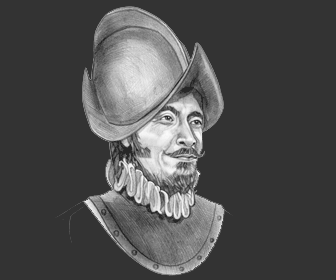
Francisco Vasquez de Coronado (1510 – September 22, 1554)
The second son of Juan Vázquez de Coronado y Sosa de Ulloa and Isabel de Luján, Francisco was a native of Salamanca, Spain. Of noble parentage, during his early manhood he held various governmental administrative posts. As the second son, he stood little chance of inheriting the family estates. Thus, in 1535 he set out to seek his fortune in New Spain, accompanied by the first Viceroy of New Spain, Viceroy, Antonio de Mendoza. He and Mendoza had become friends when they met at the Spanish court. After his arrival, he married Beatriz de Estrada, from whom he inherited a large fortune. In 1538, Mendoza appointed Coronado the Governor of New Galicia, a province in northwestern Mexico.
Seven Cities of Gold
Many of the Spanish Conquistadores spent fortunes in money and lives searching for the Seven Cities of Gold. These explorers included Cabeza de Vaca and Hernando Coronado. The Lost City of Quivira was one of those cities. Other cities in the Legend included El Dorado and Cibola. The legend of the Seven Cities of Gold arose in 1535 when four shipwreck survivors washed up on the shores of Texas. They walked overland, arriving at last in Mexico City. There, they related tales they had heard of vast wealth located in what is now the Sonoran Desert. Their tale led to many of the Conquistador’s expeditions into the great deserts of the Southwest and the Great Plains. These tales appeared confirmed when Mendoza sent Friar Marcos de Niza, Estevanico on, and expedition into the area in 1539. Upon their return, they spoke of having seen, but not visited, one of the cities.
Preparation for the Trek
Mendoza began organizing a larger expedition to find these cities. To gather intelligence on the area he sent Melchior Díaz, the commander of the outpost at San Miguel de Culiacán, to investigate. Diaz departed on November 17, 1539. He was to report back before Coronado’s expedition departed in February. To finance the expedition Mendoza and Coronado spent their own funds. Coronado used his wife’s fortune as collateral for a loan and secured another loan to provide his share of the funding. The expedition would consist of two separate parties. Hernando de Alarcón would lead a sea expedition that would have most of the supplies on the ships. Alardon was to sail up the Gulf of California, locate the mouth of the Colorado River and meet the land expedition at a specified point to re-supply them. Coronado would lead the expedition that would penetrate the interior to find the Seven Cities of Gold. Melchior Díaz had not returned when Coronado was ready to depart. With all the soldiers, horses and supplies assembled, Coronado set out anyway. The expedition included over 1400 men and 1500 animals to serve as food. The men consisted of about 400 Spanish soldiers, the remainder native allies and some slaves. The expedition would skirt the Gulf of California coast until it reached the Spanish outpost of San Miguel de Culiacán around March 23, 1540. Coronado would rest his men here for about a month.
Francisco Vasquez de Coronado’s fleet departed San Miguel de Culiacán on their quest to explore what the area of the Colorado River on April 22, 1540. Hernando de Alarcón would depart by ship in May. The plan was for Alarcón to find the mouth of the Colorado River, sail up it and rendezvous with Coronado’s overland expedition.
Coronado traveled northwest along the Gulf of California coast until he reached the Sinaloa River. The expedition followed the river valley until they found a pass that allowed them to go north to the Yaqui River. From there he and his men followed rivers and traversed passes until they crossed the present Mexico/United States border. They traveled through New Mexico and Arizona. Upon reaching the Zuni River, he encountered the Zuni people. Low on supplies by this time, Coronado demanded that he be allowed to enter their city, Hawikuh. When the Zuni refused, Coronado attacked them and subdued the village. This was the celebrated Spanish “Conquest of Cíbola.” While resting in the city, Coronado sent out Melchior Díaz to meet with Hernando de Alarcón’s ship and retrieve their supplies.
Coronado’s expedition spent the winter in Cibola. A slave belonging to Coronado told tales of a rich land to the northeast. Quivira, the capital, the slave related was a rich city that promised his owner great wealth.
Alarcón had sailed up the Sea of Cortez, usually called the Gulf of California, until he found the source of the Colorado River. He sailed up the river as far as he could, though he did not reack Coronado. Foiled, he buried the supplies and planted a note in a bottle. Because worms were eating holes in the ship’s hulls, he returned to San Miguel de Culiacán.
Some local Indians had seen Alarcón’s men bury the supplies and traveled to inform Cornado. Coronado retrieved the supplies and read Alarcón’s, which informed him of the reason he had departed. With fresh supplies, Coronado decided to embark on another expedition, following the tales of his slave. In the spring of 1541 he embarked on the search. During this expedition, groups from his expedition discovered the Grand Canyon and the Rio Grande River. These men were the first Europeans to see the Grand Canyon and the Colorado River far below. The expedition penetrated to the vast prairies of North America where Coronado and his men saw the vast herds of buffalo. They reached northeast as far as current central Kansas. He did reach the city of Quivira, but found no riches. Upon questioning, the slave admitted the entire story was a fabrication. Coronado rewarded him with execution.
Coronado returned to San Miguel de Culiacán where he would live until his death September 22, 1554. His expedition was largely considered a failure, however his discoveries opened the door to the Spanish conquest of the Southwest in later years.
The next episode will tell the story of Pedro Menéndez de Aviles and the founding of St. Augustine. The articles in the book contain much more detail about the topics discussed. Additionally, there are other topics not included in the podcast. I encourage you to subscribe to both my web site, mossyfeetbooks.com and this You Tube channel.
I hope you enjoyed this podcast and thank you for listening.

 Mossy Feet Books - Author Paul R. Wonning