
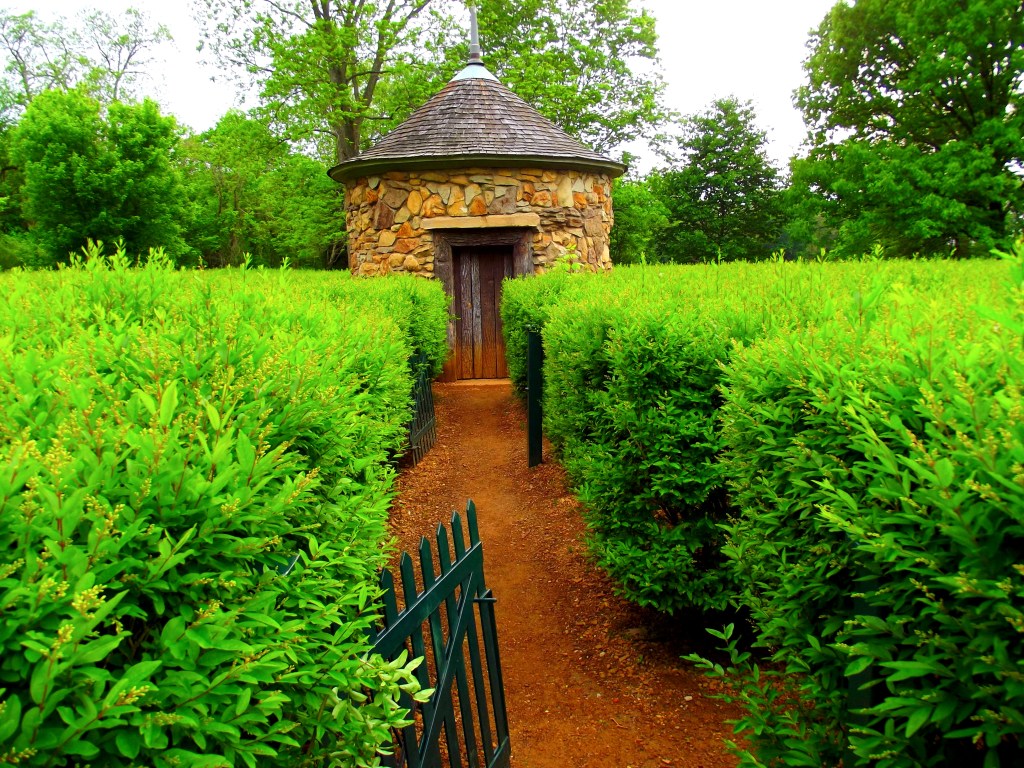
Harmonist’s Labyrinth at New Harmony, Indiana
Today we will visit the other labyrinth in New Harmony, the Harmonists Labyrinth.
From the Book
Southwest Indiana Day Trips
Transcript:
Greetings, today we will visit the other labyrinth in New Harmony, the Harmonists Labyrinth.
Located along Main Street on the south side of New Harmony, visitors will find the Harmonist’s Labyrinth.
Before getting started, I would encourage you to subscribe to the Mossy Feet Books You Tube channel for more great content. If you like my videos, please hit the “Like,” button. The more likes I get the more You Tube will show it to other people, allowing me to grow the channel. I also entreat you to visit my website, http://www.mossyfeetbooks.com. There you will find sample chapters, podcasts, a slew of content and links to where you can buy my books. While visiting the web site you can subscribe to it and receive email notifications of when I publish a new book or other content, like this video and podcast. This episode is based on my book, Southwest Indiana Road Trips. If you like what I am doing, please purchase a book, as it helps fund my work.
Johann Georg Rapp founded the group that would become the Harmony Society in Iptingen, Germany, in 1785. The Lutheran Church persecuted the members, so they migrated to the United States. They purchased land in Butler County, Pennsylvannia on February 15, 1805. They formed the Harmony Society and placed all of their possessions in common. There were about 400 people in the Society. They called their town Harmony. They established another town in Indiana along the Wabash River, which they also called Harmony. They established another town in 1824 in Pennslyvannia they called Economy. The Harmonists, also called Harmonites, or Rappites, practiced a communal lifestyle. Each male member had a trade of some sort while women worked in textiles or agriculture. They practiced a celibate lifestyle and admitted new members that satisfied their requirement. The Society existed for about 100 years, dissolving about 1906.
George Rapp, along with several other men, traveled to the Indiana Territory in April 1814. They sought a new site for their community in Pennsylvania. The site the town now occupies caught their eyes. They decided it was an ideal place to establish a community as the Wabash is navigable and close to the Ohio River. They could easily access the markets of New Orleans with their goods. They would establish a community on the banks of the Wabash and thrive there for ten years. Then they sold the town to a second group and moved their congregation back to another site in Pennsylvania.
The second group, headed by idealist Robert Owen, purchased the town and used it to perform an experiment in socialism. During this time, the town became a leading center of science, especially the natural sciences.
The members of the Society built labyrinths in each of these towns. The purpose of the labyrinth was to provide a place of meditation and reflection as they made their way to the center of the labyrinth. They constructed the labyrinth at New Harmony using plant materials. The path led through vines, flowers and bushes to a small log cabin in the center of the labyrinth.
Native trees, shrubs and flowers invaded the original labyrinth soon after they left the town. During the years 1939 through 1941, the residents of the town constructed this restoration, planted with a shrub called box. The original layout of this labyrinth did not follow the layout of the Harmonist one, nor is it in the original location. The original one was to the north of this labyrinth. Local historian Bertha Crosley Ball’s descendants funded the labyrinth design changes in 2008 from a Harmonist design of it.
The Labyrinth was an important religious symbol to the Harmonist. It represented a person’s path to God. The destination in the center represented the final destination, God. Since the labyrinth had only one path that led to the center, it represented the one true path to God. The Harmonists hoped to achieve with the idealistic society they endeavored to construct.
The episode is based upon my book, South Central Indiana Road Trips, available on the web site, http://www.mossyfeetbooks.com. The book is the first book in the 9 volume Road Trip Indiana Series. The books include all the historical markers, as of 2022, in Indiana with the text and back story. The books also include a nearly complete listing of virtually every tourism destination in the state. The destinations include parks, museums, drive in theaters, bowling alleys, wineries and much, much more. I encourage you to visit the web site and subscribe to it.
You can find my books locally at the Walnut Street Variety Shop in Batesville, Indiana.
I hope you enjoyed this podcast and thank you for listening.

 Mossy Feet Books - Author Paul R. Wonning