Lincoln Pioneer Village & Museum
Today we will visit the Lincoln Pioneer Village & Museum in Rockville, Indiana.
From the Book
Southwest Indiana Day Trips
Transcript:
Greetings, today we will visit the Lincoln Pioneer Village & Museum in Rockville, Indiana.
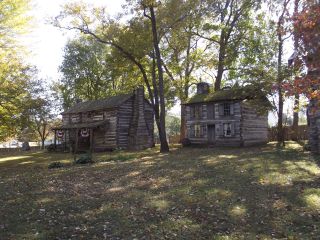
The fourteen Lincoln era cabins on display include the Pioneer Schoolhouse, the Lincoln Homestead Cabin, and the Old Pigeon Baptist Church. The Rockport Park Improvement Association built and maintains the museum. It includes hundreds of artifacts from Spencer County’s past.
Before getting started, I would encourage you to subscribe to the Mossy Feet Books You Tube channel for more great content. If you like my videos, please hit the “Like,” button. The more likes I get the more You Tube will show it to other people, allowing me to grow the channel. I also entreat you to visit my website, http://www.mossyfeetbooks.com. There you will find sample chapters, podcasts, a slew of content and links to where you can buy my books. While visiting the web site you can subscribe to it and receive email notifications of when I publish a new book or other content, like this video and podcast. This episode is based on my book, Southwest Indiana Road Trips. My book, Lincoln State Park, goes into much more detail about Lincoln’s presence in the area and the history of the park. If you like what I am doing, please purchase a book, as it helps fund my work.
Local Lincoln historian George Honig suggested to the Spencer County Historical Society that a replica pioneer village be constructed to honor the memory of the county’s famous son, Abraham Lincoln, in the early 1930’s. That organization and the Rockport City Council supported the idea. Officials requested help from the Federal Emergency Relief Administration (FERA).
Congress created the Federal Emergency Relief Administration (FERA) with the signing of the Federal Emergency Relief Act on May 12, 1933 by President Franklin Roosevelt. FERA did now directly oversee projects. State governors would apply to the agencies for funding and the agency, after granting approval, provided funding for state and local projects. About 20,000,000 people received some form of benefit from the program. Funds from the program provided 40,000 miles of new roads, 200,000 miles of repaired roads, and 5,000 public buildings. Other programs included funding for educational programs, work relief programs and direct cash payments. FERA funded some projects in Lincoln State Park. These included several fish rearing ponds in the park. FERA was terminated by 1938, largely replaced by the WPA.
Fera workers initially moved into the site and began construction of the replica cabins. They were replaced later on by workers from the WPA.
President Franklin D. Roosevelt, acting under authority granted him by the Federal Emergency Relief Act, created the Works Progress Administration (WPA) by signing Executive Order No. 7034 on May 6, 1935. The Works Progress Administration’s name was changed to Work Projects Administration in 1939. During its lifetime the WPA provided funding for a vast variety of projects. These included parks, schools, roads, airports as well as many other projects. The process involved a local or state government official sent a proposal to their state WPA office, which reviewed the proposal and then sent it on to the WPA office in Washington, DC. The proposal would then be sent on to the President for approval. The project could be rejected on any of the steps. Typically, the state or local entity had to provide any where from 12% – 25% of the total funding. The WPA provided funds for about 8,000 new or improved parks, 16,000 miles of new water lines, 650,000 miles of new or improved roads. Additionally, the Administration provided funding for manufacturing clothing and providing school lunches for needy children. The WPA was terminated in 1943.
Workers at the site began work in 1934 and completed in 1935. George Honig, in addition to being a historian, was also an artist and sculptor. He designed the memorial on the grounds as well as oversaw the work. The replica village is located near the site where Lincoln operated his ferry boat. A wooden stockade fence surrounds the village, which contains 14 replica structures. Most of the structures are buildings which were connected to Abraham Lincoln in some way. They include:
Administration Building and Museum Room
John Pritcher Law Office
Azel Dorsey House
Daniel Grass House
Aunt Lepha Mackey House[a]
Gentry Mansion
Former Home of Rueben Grigsby
Pigeon Creek Baptist Church
Brown’s Inn
Lincoln Cabin
Market and Barter House
Grandview Blockhouse
Mr. and Mrs. Josiah Crawford House
William Jones store
The museum includes many interesting artifacts including a section of rail that Lincoln split, a loom, a cupboard and Abe’s broad ax.
The 1955 Burt Lancaster movie, The Kentuckian, was filmed in the village.
Lincoln Pioneer Village & Museum
928 Fairground Drive
Rockport, Indiana, 47635
(812) 649-9147
https://lincolnpioneervillage.com/about/
The episode is based upon my book, South Central Indiana Road Trips, available on the web site, http://www.mossyfeetbooks.com. The book is the first book in the 9 volume Road Trip Indiana Series. The books include all the historical markers, as of 2022, in Indiana with the text and back story. The books also include a nearly complete listing of virtually every tourism destination in the state. The destinations include parks, museums, drive in theaters, bowling alleys, wineries and much, much more. I encourage you to visit the web site and subscribe to it.
You can find my books locally at the at the Romweber Marketplace in downtown Batesville, Indiana.
I hope you enjoyed this podcast and thank you for listening.

 Mossy Feet Books - Author Paul R. Wonning