The First Execution for a Crime in British North America
Greetings, today I will talk about the first recorded execution for a crime to take place in British North America.
From the Book:
Colonial American History Stories – 1215 – 1664
Transcript:
Greetings, today I will talk about the first recorded execution for a crime to take place in British North America.
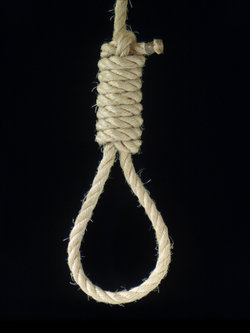
The first execution for a crime took place on September 30, 1630 when John Billington was hung for committing murder.
Before getting started, I would encourage you to subscribe to the Mossy Feet Books You Tube channel for more great content. If you like my videos, please hit the “Like,” button. The more likes I get the more You Tube will show it to other people, allowing me to grow the channel. I I also entreat you to visit my website, http://www.mossyfeetbooks.com. There you will find sample chapters, podcasts, a slew of content and links to where you can buy my books. While visiting the web site you can subscribe to it and receive email notifications of when I publish a new book or other content, like this video and podcast. This episode is based on my book, Colonial American History Stories 1215 – 1665.
After a trial in Plymouth for murder, the jury convicted John Billington of murder. Massachusetts Governor William Bradford, after consultation with the Massachusetts Bay Colony governor, decreed death by hanging for the convicted murderer.
John Billington (c. 1580 – September 30, 1630)
The son of John Billington and Anne of Thomas Billington / Newton, John had married Eleanor Armstrong, with whom he had two sons. The Billingtons had joined the Mayflower passengers that came to the New World in 1620 when the Separatists failed to recruit enough of their number to reach the desired complement of settlers. Before boarding the Mayflower, passengers had to sign a contract with the London Virginia Company. This contract bound the passengers for seven years. As per the terms, each signer would be bound to work six days a week for the Company and surrender all crops, goods and monies earned to the Company. In return, the signer received passage across the ocean, a share of the profits. Even family gardens were included in the reckoning of division of goods.
Troublemakers
Billington and his wife proved to be troublemakers from the beginning. His fellow passengers soon referred to him as a “foul mouthed miscreant” and a “knave.” When the Mayflower went astray and the colony ended up in an area not covered by the charter, Billington was one of the leaders of the dissenters that threatened to go off on his own, probably to escape the harsh terms of the contract. The dissension created the need for the Mayflower Compact, which Billington signed.
Continued Problems
Billington had a dispute with Captain Myles Standish, became implicated in a plot against the Plymouth Church, became involved in disputes with the other settlers and in general caused problems. His wife also got into trouble, receiving a sentence to sit in the stocks and be whipped for slander against a fellow colonist.
Dispute, Murder and Hanging
Billington and John Newcomen argued over hunting rights. During the dispute, Billington took a blunderbuss and shot Newcomen in the back, killing him. Governor William Bradford consulted with John Winthrop, the Massachusetts Bay Colony Governor, and decided that capital punishment was needed to punish Billington. A jury in Plymouth tried and convicted him. He died by hanging on September 30, 1630. The location of his grave is not known.
The episode is based upon my book, Colonial American History Stories – 1215 – 1664, available on the web site, http://www.mossyfeetbooks.com. The book is the first book in the 6 volume Timeline of United States History Series. Discover some of the famous and almost forgotten historic stories of America. The story begins with the signing of the Magna Carta in 1215 and the beginnings of the concept of limited government and ends, for now, with the beginning of the American Revolution in 1775. The articles in the book have much more detail as well as articles not included in this podcast series.

 Mossy Feet Books - Author Paul R. Wonning