
Historical Site – Newburgh Raid
Greetings, today we will visit an interesting site along the Ohio River in the village of Newburgh, Indiana a couple of miles east of Angel Mounds in Evansville.
From the Book
Southwest Indiana Day Trips
Transcript:
Before getting started, I would encourage you to subscribe to the Mossy Feet Books You Tube channel for more great content. If you like my videos, please hit the “Like,” button. The more likes I get the more You Tube will show it to other people, allowing me to grow the channel. I also entreat you to visit my website, http://www.mossyfeetbooks.com. There you will find sample chapters, podcasts, a slew of content and links to where you can buy my books. While visiting the web site you can subscribe to it and receive email notifications of when I publish a new book or other content, like this video and podcast. This episode is based on my book, Southwest Indiana Road Trips. If you like what I am doing, please purchase a book, as it helps fund my work.
A short distance east of Angel Mounds
Text of the Marker:
The first town north of the Mason-Dixon Line to be captured by the Confederate forces during the War Between the States. Brig. Gen Adam R. Johnson with a guerrilla band crossed the Ohio River and confiscated supplies and ammunition without a shot being fired
Location:
The marker is just off of Indiana State Road 662 in the town of Newburgh, about 2.75 miles past Angel Mounds State Park. It is on Water Street, which is south of the highway, between the highway and the Ohio River.
37° 56.623′ N, 87° 24.231′ W. Memorial is in Newburgh, Indiana, in Warrick County. It is on West Water Street, on the left when traveling west. Memorial is at or near this postal address: 22 West Water Street, Newburgh IN 47630, United States of America.
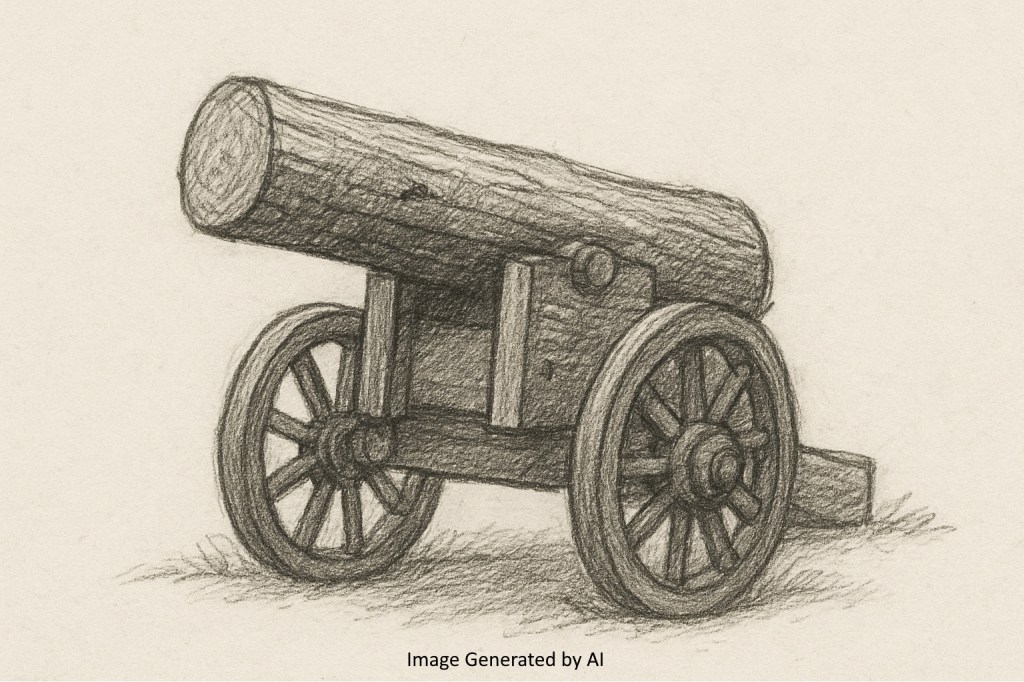
In a precursor to Hine’s Raid and Morgan’s Raid, Confederate colonel Adam Rankin Johnson captured the town of Newburgh, Indiana using two “Quaker Guns” as a ruse to subdue the town and to his nickname, Stovepipe Johnson.
Adam Rankin Johnson (February 6, 1834 – October 20, 1922)
The son of Thomas J. and Juliet (Rankin) Johnson, Adam was a native of Henderson, Kentucky. He started working at a local drugstore at age twelve, then migrated to Texas to become a surveyor and a noted Indian fighter. When the Civil War broke out, he returned to Kentucky, raising his 10th Kentucky Partisan Rangers there. This unit specialized in operating deep behind Union line, harassing supply depots and attacking isolated garrisons of Union troops. After his July 16, 1862 raid on Newburgh, he accompanied Brigadier John Hunt Morgan’s raid through southern Indiana. The A gun firing accident blinded him, causing his capture by Union troops in 1864. Most of the remainder of the war he spent as a prisoner. He would later found the town of Marble Falls, Texas, also known as the “blind man’s town.”
“Quaker Guns”
Quaker guns were fake cannon constructed to fool an enemy. The first known use was Colonel William Washington’s use of a pine log configured to resemble a cannon during the Revolutionary War. The trick worked, fooling several Loyalist troops holed up in a barn into surrendering. The guns name, Quaker guns, refers to the pacifist stance of Quakers in committing no violence.
Prior to the Raid
Newburgh is just east of Evansville on the Ohio River. The town was almost undefended, with about eighty Union troops there in various stages of recovering from war wounds. Their guns were stored in an unguarded warehouse on the riverfront. The commander of the Union troops, Union Bethell, had little support from the State of Indiana, receiving little in the way of aid for training his troops or weaponry. He, like many others in the town, were eating lunch when Johnson launched his noonday raid. Coincidentally, the telegraph line that connected Newburgh to the outside world was also inoperative.
The Raid
Johnson had heard about the unprotected guns and the medical supplies at the hospital where the Union troops were recovering. He wanted the guns and the supplies, badly needed by his Confederates. Prior to launching his expedition across the Ohio River, Johnson had two Quaker guns constructed, using stovepipes and blackened logs. He positioned his “artillery” on a bluff on the river overlooking Newburgh. Around noon, he and about thirty-five soldiers boarded a flatboat and a rowboat and crossed the Ohio River. Landing unopposed, the raiders confiscated the supplies they needed. Commander Bethel, hearing of the incursion, rushed out to confront the Confederates. Johnson pointed across the river at the “cannon,” causing Bethel to capitulate. The raid lasted about five hours, during which time Johnson took many of the things he needed. Since the telegraph was out of order, Bethel was unable to summon nearby Union troops. Johnson and his men departed Newburgh, successfully evading Union capture. He had captured the first town north of the Mason-Dixon line without firing a shot.
Aftermath
The raid harmed the Confederate cause more than it helped it. Recruiting in Indiana shot up substantially and Governor Morton was able to raise more money for defense. A year later Morgan would launch his famous raid in spite of these improvements.
The episode is based upon my book, Southwest Indiana Road Trips, available on the web site, http://www.mossyfeetbooks.com. The book is the first book in the 9 volume Road Trip Indiana Series. The books include all the historical markers, as of 2022, in Indiana with the text and back story. The books also include a nearly complete listing of virtually every tourism destination in the state. The destinations include parks, museums, drive in theaters, bowling alleys, wineries and much, much more. I encourage you to visit the web site and subscribe to it.
You can find my books locally at the at the Romweber Marketplace in downtown Batesville, Indiana.
I hope you enjoyed this podcast and thank you for listening.

 Mossy Feet Books - Author Paul R. Wonning