
Representative Government Birthed in Colonial America
Representative Government Birthed in Colonial America
Today the author talks about the formation if the first representative government formed in Colonial America.
From the Book:
Colonial American History Stories – 1215 – 1664
Transcript:
Greetings, today I will talk about the formation if the first representative government formed in Colonial America.
Before getting started, I would encourage you to subscribe to the Mossy Feet Books You Tube channel for more great content. If you like my videos, please hit the “Like,” button. The more likes I get the more You Tube will show it to other people, allowing me to grow the channel. I I also entreat you to visit my website, http://www.mossyfeetbooks.com. There you will find sample chapters, podcasts, a slew of content and links to where you can buy my books. While visiting the web site you can subscribe to it and receive email notifications of when I publish a new book or other content, like this video and podcast. This episode is based on my book, Colonial American History Stories 1215 – 1665.
The charter granted by the Crown on March 3, 1629 stated that the Massachusetts Bay Colony’s General Court had to meet on an annual basis. This General Court admitted new freemen, chose officers, and made laws and ordinances for the good and welfare of the company. These laws could not conflict with Britain’s laws. The first meeting of this General Court at Boston occurred on October 19, 1630. The main order of business was to admit freemen to the colony.
The term freeman applied to a male that had the full rights of citizenship in the colony. Each colony had slightly different criteria for being eligible for election to the status. In the Bay Colony in order for eligibility, a man had to belong to the church and not a slave or indentured servant. A freeman could own property and vote in the town meetings. The freemen chose the officers that would rule the colony until the next election. During the summer of 1630 seventeen shiploads of people immigrated to Massachusetts Bay Colony. By October, many of these arrivals had applied for election as freemen.
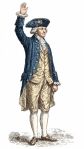
The Court elected 106 new freemen during the session. The Governor John Winthrop and Deputy Governor Thomas Dudley presided over the meeting. At this session the proposal that freemen should have the power to choose Assistants, Governor and Deputy Governor. The Assistants, Governor and Deputy Governor were to make the laws and statues, and have the power to enforce those laws. The assembled freemen assented to this proposal by raising their hands in assent. They also elected the constable of Charlton and Waterbury, as well as set the rates that sawyers could charge.
This court’s meeting marked the beginning of representative government in North America, as we know it.
By 1634 fears arose among the freemen of Massachusetts.
They were afraid that the Massachusetts General Court would pass laws that would create injustice. To solve this problem, the freemen of Massachusetts desired a code of laws that would prevent this from happening. The Body of Liberties that would result from this effort would not pass the General Court until 1641.
Massachusetts Bay Colony Charter
The Massachusetts Bay Colony received its royal charter in 1629. A group of Puritan merchants organized the Colony after gaining the charter. They chose the name of the colony from the Massachusetts tribe of natives that lived along the coastal regions of New England. The charter enabled the Colony to organize a government. That government could pass necessary laws as long as the laws did not conflict with the laws of England. The Colony leadership was answerable only to the King. The voting franchise at first existed only to stockholders of the Colony. They set up the General Court of Massachusetts Bay and chose its members. The Court chose John Winthrop as the first governor. The first group of colonists set sail in 1630 for the New World and established their colony later that year.
Extension of the Voting Rights Franchise
In England during this period, the right to vote was not considered universal. However, John Winthrop realized that men would accept leadership more readily if they chose the men leading them. Thus, the General Court extended the right to vote to all “freemen” at a May 18, 1631 meeting. Each town in the colony had different requirements to be selected as a freeman.
Massachusetts General Court
These freemen elected the Assistants who held all the executive and judicial power. The Assistants, eighteen members of the General Court, elected the Governor and Deputy Governor. This Assistants court was to meet monthly. A General Court, consisting of all the freemen in a town, met four times a year.
Problems Arise
The General Court did not meet for the required four times a year. In the interim, the Assistant’s Court passed laws without the General Court’s guidance. The laws the Assistants Court passed were random, based upon the case before them. The freemen grew concerned that the lack of a code to govern lawmaking would lead to injustice. At the May 24, 1634, meeting of the General Court the freemen requested they be allowed to view the Charter. After examining it, the freemen demanded that only the freemen draft laws. Governor John Winthrop pointed out that the number of freemen, now at over 1000 men, was simply too large to allow this. He suggested that the freemen elect deputies to go to Boston to draft the laws. The General Court responded by electing three deputies from each of the eight towns on May 14, 1634 to meet at Boston to draft laws.
The episode is based upon my book, Colonial American History Stories – 1215 – 1664, available on the web site, http://www.mossyfeetbooks.com. The book is the first book in the 6 volume Timeline of United States History Series . Discover some of the famous and almost forgotten historic stories of America. The story begins with the signing of the Magna Carta in 1215 and the beginnings of the concept of limited government and ends, for now, with the beginning of the American Revolution in 1775. The articles in the book have much more detail as well as articles not included in this podcast series.

 Mossy Feet Books - Author Paul R. Wonning