
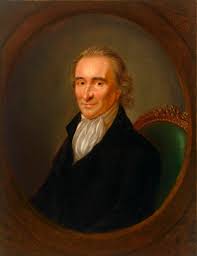
Pivotal Event in American History – Thomas Paine Publishes Common Sense
On January 10, 1776, Thomas Paine published “Common Sense,” a 47-page pamphlet that ignited the American Revolution and changed the course of history. With its clear and persuasive arguments, Paine’s masterpiece convinced millions of colonists to fight for independence from Britain, shaping the nation’s identity and inspiring the Declaration of Independence just six months later
From the Book:
Colonial American History Stories – 1215 – 1664
Transcript:
Greetings, today I will talk about an important event in our nation’s history that occurred on January 10, 1776. On that day Thomas Paine published a booklet entitled “Common Sense.”
January 10, 1776 “Common Sense” By Thomas Paine Published
Few men were as influential to the cause of American independence as Thomas Paine. His forty-seven page pamphlet “Common Sense,” published in 1776, became the most read pamphlet in the colonies. Many historians feel that most of the 2.5 million Americans either read it, or had it read to them. Many estimate that printers published over 400,000 copies. Many newspapers at the time printed the entire text of the document.
Birth and Early Life
Francis Cocke Paine presented her husband Joseph Pain with a baby boy, Thomas, on January 29, 1736. After attending Thetford Grammar School, Thomas apprenticed to his father, a stay-maker. He was thirteen at the time. He later served a stint at sea, and then moved to Sandwich, Kent where he established a shop. He married Mary Lambert on September 27, 1759. She and her infant later died in childbirth. Thomas migrated back to Thetford, England after his business failed. He became a master stay maker and became involved in both church and politics. He lived in a room above Samuel Ollive and Esther Ollive’s tobacco shop. Paine later married their daughter, Elizabeth in 1771.
Rough Times
Serving as an Excise Officer, Thomas advocated for better pay and working conditions. He published his first political pamphlet, The Case of the Officers of Excise, in 1772. On June 4, 1774, he separated from his wife. His business again failed and he faced financial ruin and debtor’s prison. He migrated to London where a mutual friend introduced him to Benjamin Franklin who was in London at the time.
Emigration to America
Franklin recommended that he move to America and gave him a letter of recommendation. Paine took the advice and boarded a ship to Philadelphia in October 1774. He contracted typhus from contaminated drinking water on the ship. He arrived in Philadelphia more dead than alive. Franklin’s physician met him at the dock, took him home and nursed him back to health. By 1775, he rose to become editor for the publication Pennsylvania Magazine. He had found his home, as he found he excelled at publishing.
Common Sense
During this period, pamphlets were the most popular way of disbursing ideas. With revolution brewing in the air, Thomas Paine wrote Common Sense. First titled Plain Truth, future Founding Father Benjamin Rush helped him edit and publish it. Rush convinced him to change the title to Common Sense. Paine first published it anonymously as the content was treasonous. In this period, most Americans still thought of themselves as aggrieved Britons. After Common Sense swept through the colonies, much of that thinking changed. Many began thinking of themselves in a different light.
He Develops His Ideas
He divided the ideas conveyed in Common Sense into four sections. The first section describes the difference between society and government. He describes how people form a society. They then devise government to deal with complex issues that arise when people form into larger groups. The second section deals with his theory of all men born equal. Using theology, he debates that the distinction between monarchs and commoners is unnatural. The third section describes the state of affairs between Britain and the Colonies in 1776. Paine develops his model of an ideal government in this section also. The last section contains some general thoughts and views on how America could rise to rival Britain.
Huge Role in Independence
Common Sense played a huge role in public debate about independence, which had been subdued before publication. Common Sense brought the debate out into the open. Though the pamphlet did not influence the Continental Congress, it did aid it in making the case for Independence. Six months later the Continental Congress issued the Declaration of Independence.
You can find a copy to download at this link:
This article will be included in the book 1776, which I am writing now. I hope to have it finished by early summer 2026.
I would encourage you to subscribe to the Mossy Feet Books You Tube channel for more great content. If you like my videos, please hit the “Like,” button. The more likes I get the more You Tube will show it to other people, allowing me to grow the channel. I also entreat you to visit my website, http://www.mossyfeetbooks.com. There you will find sample chapters, podcasts, a slew of content and links to where you can buy my books. While visiting the web site you can subscribe to it and receive email notifications of when I publish a new book or other content, like this video and podcast. If you like what I am doing, please purchase a book, as it helps fund my work.
You can find my books locally at the at the Romweber Marketplace in downtown Batesville, Indiana.
I hope you enjoyed this podcast and thank you for listening.

 Mossy Feet Books - Author Paul R. Wonning