
Dehydrating the Last Tomatoes of the Season
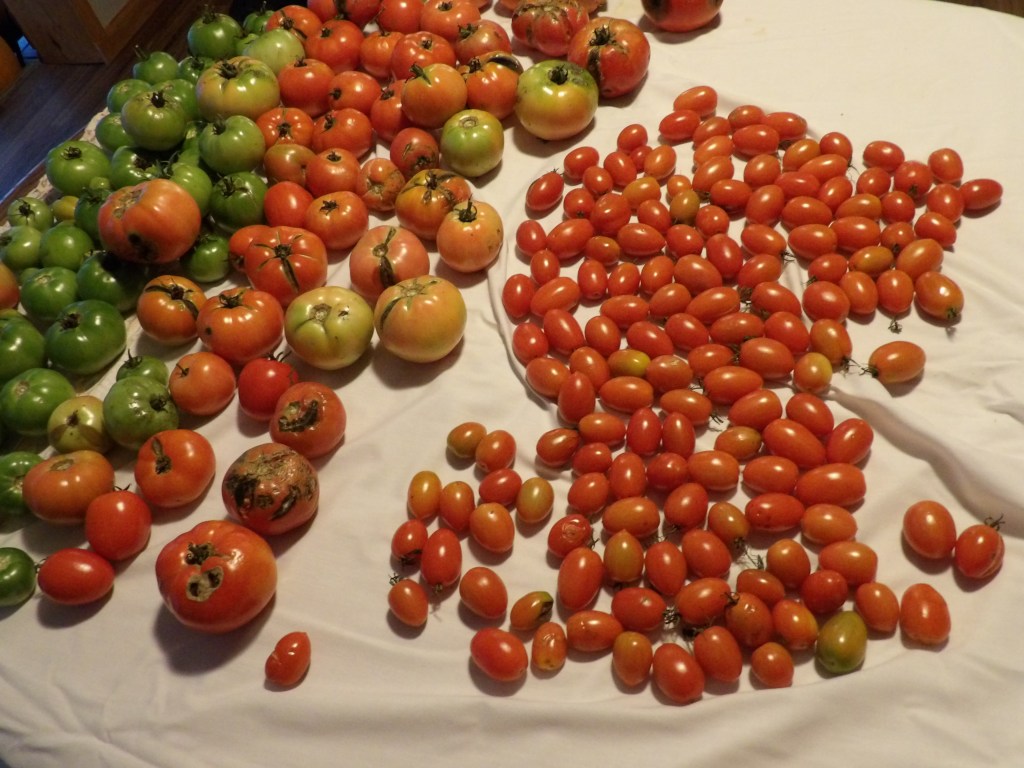
Until Monday, October 30, I had been covering the tomatoes and green beans with row cover and protecting them from the first light frosts. The nighttime lows during early and mid-November had ranged from 34 – 39 degrees, enough to cause a light frost on the lawn, but not so cold that the row cover would allow the tomatoes to freeze. So, by late November I was still picking tomatoes and green beans from the garden, as well as lettuce, snow peas and cabbage. But on Monday night the weather forecasters were calling for nighttime lows in the mid 20’s.
Wouldn’t Survive
The tender crops of green beans and tomatoes would not survive such cold temperatures, even under the protection of the row cover. So, on Monday morning I picked the green tomatoes that had attained full size; but were not yet beginning to ripen. I also picked the ripening ones and some few that were fully ripe. Many had rotten spots, but most were in good shape.
What to Do with So Many Tomatoes.
I will dehydrate most of these tomatoes. Last summer I purchased a dehydrator and have been dehydrating green beans, beets, tomatoes and onions.
Preparing the Tomatoes
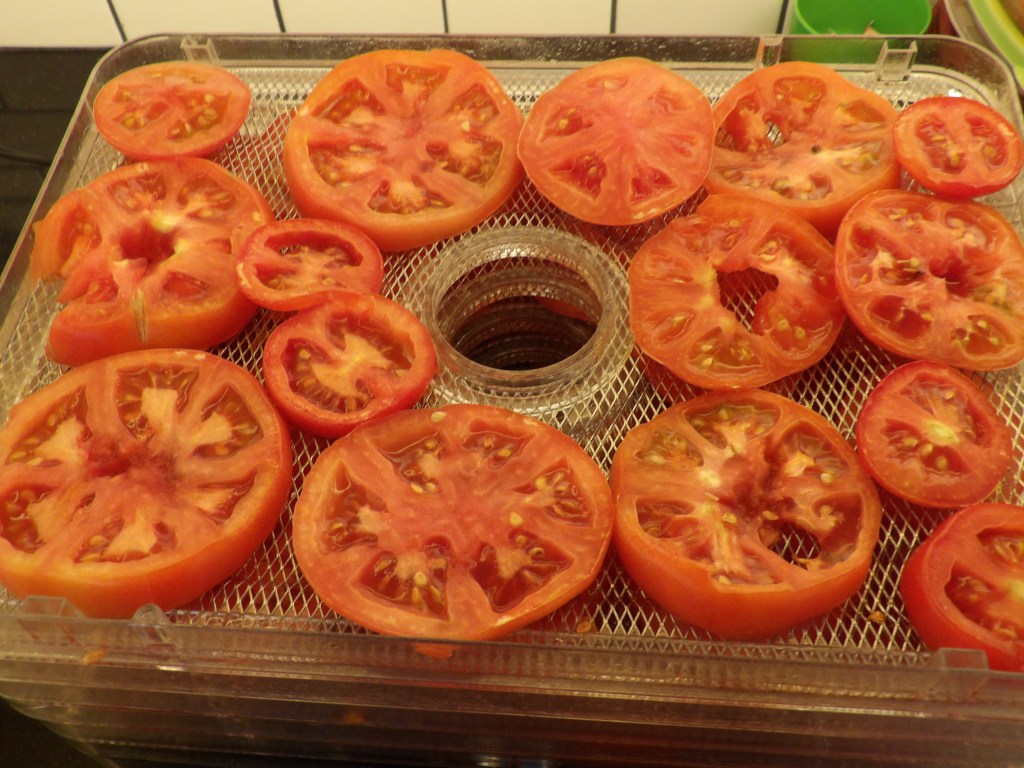
The first step is to wash the tomatoes. After washing, they must be sliced into 1/4″ slices. There is no need to peel them or blanch them. After slicing, I put a light coating of olive oil on the dehydrator trays and lay the slices in a single layer on the trays and place in the dehydrator. You can use slicer tomatoes or paste tomatoes. Paste tomatoes I usually quarter and scrape out the pulp and seeds to speed drying. I set the temperature for 160 degrees. It will take about 10 hours in the dehydrator to dry them.
The Dehydrated Tomatoes
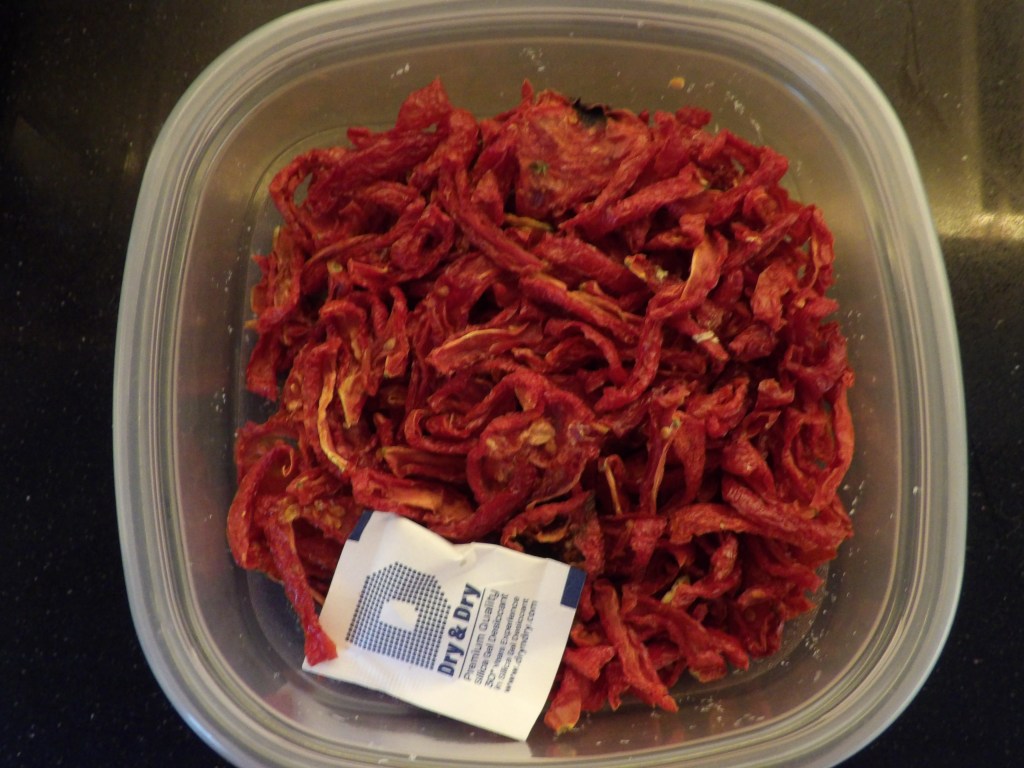
When done, the tomatoes will be dark red and still somewhat flexible. I store these temporarily in plastic containers that seal and place a packet of silica gel in the container to soak up any moisture that enters the container.
Tomato Powder
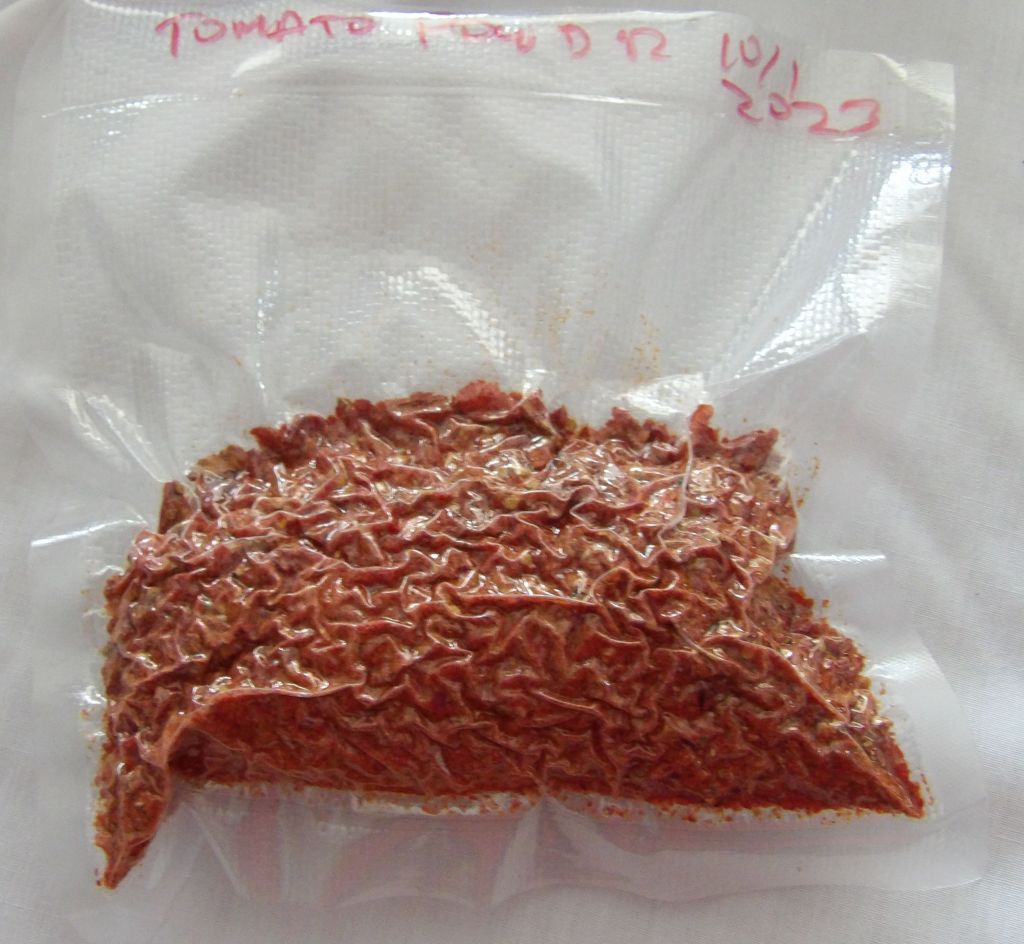
When I have two or three containers I run the tomato pieces through a blender, producing tomato powder. This does not have to be a real fine powder, there can be small chunks in it.
Storage
After making the powder, I place it in vacuum seal bags and seal the bags. I store it in a cool, dry room where it will keep for several months.
Using Dehydrated Tomatoes
You can, of course, store the tomato chunks for use in soups and stews. I like making tomato powder because you can make tomato juice, sauce or puree from it, depending upon how much water you add to the powder.
Tomato powder to tomato paste
2 parts powder, 1 part water
Tomato powder to tomato sauce
1 part powder, 6 parts water
Tomato Juice
2 tablespoons of powder in 8 ounces of water.
Gardener’s Guide to the Raised Bed Garden
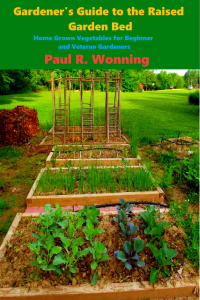
The Gardener’s Guide to the Raised Garden Bed provides a wealth of information about growing vegetables in raised beds. The book includes chapters about building materials, siting, plant nutrients, soil amendments, irrigation, soils, composting and much more. Gardeners will find a month by month journal of garden activities to guide them along. Gardeners using row style gardens will find the gardening handbook useful, as well.

 Mossy Feet Books - Author Paul R. Wonning