
The Battle of Esseneca
Greetings, today I will relate the events that occurred during the week of July 26 through August 1. The Battle of Essenca is the most important event, however I will also relate several other events that took place at that time.
From the Book
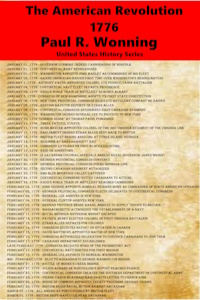
The American Revolution – 1776
Greetings, today I will relate the events that occurred during the week of July 26 through August 1. The Battle of Essenca is the most important event, however I will also relate several other events that took place at that time.
Major Andrew Williamson mustered the Ninety-Six District Regiment of Militia in response to the Cherokee attack at Findlay’s Station. The force totaled nearly 1100 men and included some Georgia militia as well as some Catawba Indians, Rangers and South Carolina troops. Williamson planned a raid against the Cherokee Esseneca Town, located near current Clemson, South Carolina, in Pickens County. As the troops traveled, they burned the home of the British Deputy Superintendent Alexander Cameron. Cameron had been agitating troubles with the Cherokee for some time. As the troops continued to advance after burning the home they approached the Keowee River, they attempted to cross at Esseneca Ford. Cameron had Cherokee spies watching this force. He attacked Williamson’s force on August 1, 1776, with about 1,200 Cherokees and Loyalists. The force of the attack initially drove Williamson’s forces back; however, Lieutenant Colonel Leroy Hammond counterattacked with a troop of horsemen and drove the Cherokee/Loyalist force into retreat. As Williamson’s force pursued Cameron, they burned Cherokee villages and fields along the way.
Silas Deane dispatched a letter to the Committee of Secret Correspondence on July 27 in which he detailed his progress in his negotiations with the French. He had obtained credit of one million livres from Jacques-Donatien Le Ray de Chaumont. He had also purchased a quantity of saltpeter for use in manufacturing gunpowder. He had engaged a ship’s captain named Charles Morgan while he had been on the island of Bermuda during his difficult voyage to France. He dispatched Captain Morgan with Deane’s correspondence and saltpeter to the United States.
By July 28, 1776, news of the Declaration of Independence had reached the troops working on the new fort at Rattlesnake Hill in New York. Colonel Arthur St. Claire read the Declaration to the troops. At the conclusion of reading the document, Colonel St. Claire said, “God save the free independent States of America.”
They promptly renamed Rattlesnake Hill as Mount Independence.
He later reported, “It was remarkably pleasing to see the spirits of the soldiers so raised, after all their calamities; the language of every man’s countenance was, Now we are people; we have a name among the States of this world.”
Lord Richard Howe, Admiral of the British fleet anchored off shore of Staten Island, dispatched a letter to Secretary to the Lords Commissioners of the Admiralty Phillip Stephens on July 28, 1776, in which he reported that a flotilla of ships that he had sent up the North River on July 12 had managed to cut off supplies sent to New York down that river. He also enclosed a copy of the Declaration of Independence issued by Congress as well as copies of State Constitutions passed by New Jersey and Virginia. These documents were included in the July 22, 1776, issue of the New York Gazette. He noted reports that New York and Rhode Island had recently drafted similar documents.
On July 30, 1776, Washington sent a letter to General Howe in which he proposed a prisoner exchange. The request, which he noted was approved by Congress, stated the exchange would include, “Continental officers for those of equal rank either in the land or sea service, soldier for soldier, sailor for sailor, and citizen for citizen. They have also particularly mentioned the exchange of Colonel Ethan Allen for any officer of the same or inferior rank.”
Three months after North Carolina’s Fourth Provincial Congress had passed the Halifax Resolves, the newly seated Fifth Provincial Congress elected prominent Halifax resident Cornelius Harnett to read the Declaration of Independence publicly for the first time on August 01, 1776.
Generals Henry Clinton and Charles Cornwallis arrived at Sandy Hook, New York with 45 ships and over 3,000 additional troops on August 01, 1776.
After declaring independence on July 6, 1776, the assembly had resolved to stage an election in which the colony’s freemen would meet and elect delegates to attend a convention to write a constitution for the now State of Maryland. These freemen met on August 1 to elect these delegates.
Author Paul Wonning – Mossy Feet BooksAmazon Author Page
You Tube
Facebook – Indiana Places and History
Facebook – Stories of American History
Sustack – Indiana Places and History
Substack – Stories of American History Substack – Hoosier Scribbler
I would encourage you to visit and subscribe to the Mossy Feet Books You Tube channel for more great content. If you like my videos, please hit the “Like,” button. The more likes I get the more You Tube will show it to other people, allowing me to grow the channel. I also invite you to visit my website, www.mossyfeetbooks.com. There you will find sample chapters, podcasts, a slew of content and links to where you can buy my books. While visiting the web site you can subscribe to it and receive email notifications of when I publish a new book or other content, like this video and podcast. If you like what I am doing, please purchase a book, as it helps fund my work.
I hope you enjoyed this podcast and thank you for listening


